
Analysis
Inflation Came in Hot, But Mortgage Rates Fell: What It Means for Buyers
Inflation came in hotter than expected this week, and mortgage rates went down anyway. Average rates are roughly a quarter point lower than they were at the end of last week, which is the opposite of what we normally see when CPI and PPI both miss to the upside.
In this post we break down what happened, why we think the market reacted this way, and what it could mean for buyers who are house hunting right now. Election Day is about 17 days away, and the timing of a purchase may matter more than usual.
The numbers: both reports ran hot
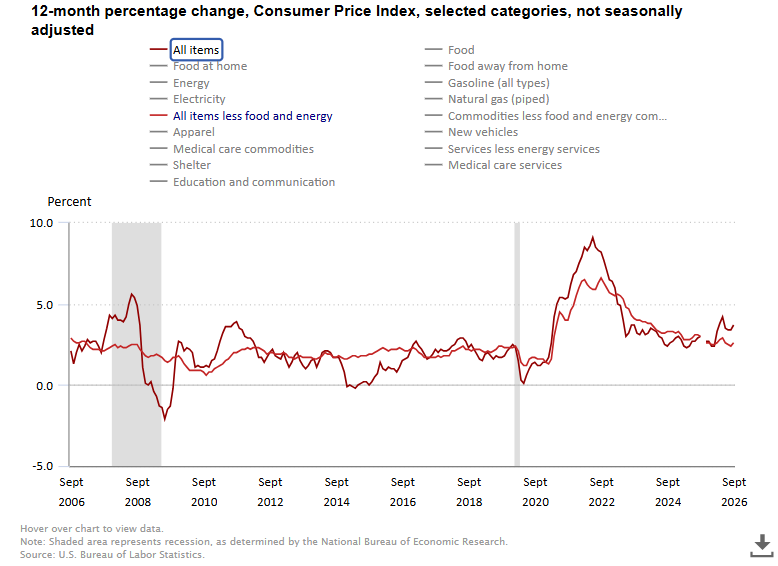
The Consumer Price Index (CPI) came out on Wednesday. The headline number was 3.7% year over year against a forecast of 3.6%. Core inflation, which strips out food and energy, came in at 2.6% against a forecast of 2.5%.
The Producer Price Index (PPI), which tracks the costs businesses pay, also came in hotter than expected.
None of these misses is huge on its own. But the direction was clearly higher, and higher-than-expected inflation usually pushes Treasury yields and mortgage rates up.
Why the market reacted backwards
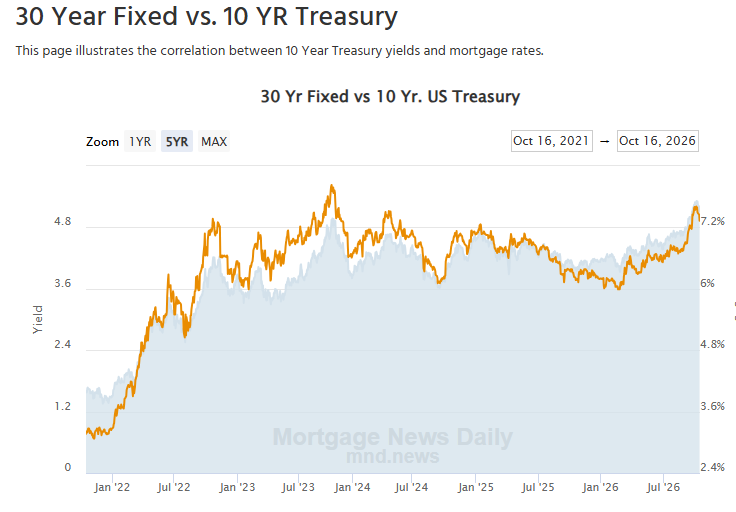
Our read is that mortgage rates and Treasury yields had climbed high enough that investors decided they were worth buying. When big buyers step in, prices rise and yields fall, even on a bad inflation print. We think that is a sign rates may be near their ceiling for this cycle.
A second factor may be a flight to safety. Some AI stocks have been sliding, and money leaving stocks often moves into Treasuries and mortgage-backed securities, which also pushes rates down.
We would have been happy with flat yields after a report like this. A drop of about a quarter point was a welcome surprise.
A caveat: the people moving billions of dollars in these markets often see more than we do. There may be news coming that we don’t know about yet, so we treat this as a signal worth watching, not a guarantee.
The next 30 to 45 days: oil, Iran, and the midterms
Right now, much of the inflation picture comes back to oil. Pressure on the global oil supply feeds into inflation, and inflation drives interest rates.
Election Day is November 3. Here is one plausible scenario, and it is only a scenario. If the election results lead to a deal in the Iran conflict, oil supply lines could reopen. Oil futures would likely drop quickly, because traders price next month’s contracts, not today’s barrel. Falling oil lowers inflation expectations, and mortgage rates would follow: possibly a quick knee-jerk drop, then a slower, steady decline.
Nobody can predict the outcome, but buyers can plan for it. If the market reacts well, everyone who is shopping then gets the same lower rates. What they can’t all get is today’s purchase price.
Common questions
What normally happens with a higher inflation report?
Rates and yields typically go up. We say this often, a mortgage is a product. And more importantly, you’re purchasing money, so if the value of money goes down then rates will go up. This week was the exception.
Why is the election a big deal?
Oil. The cost of oil bleeds into everything, and Iran supplies a lot of the global supply, plus several other countries use the Straight of Hormuz as a transportation route. Trump has said many times that a resolution will happen after the election. It makes sense that Iran would want to make Trump look bad, and election day is the deadline.
Why would we get a quick rate reduction after a resolution?
Markets are quick to react to data. We can foresee a quick drop right after a resolution because traders will initially dump money into overpriced mortgages before lower inflation drives them down further. When a lot of money moves into treasuries and mortgage backed securities, rates drop.